
Fellowship in Pain Management Medicine
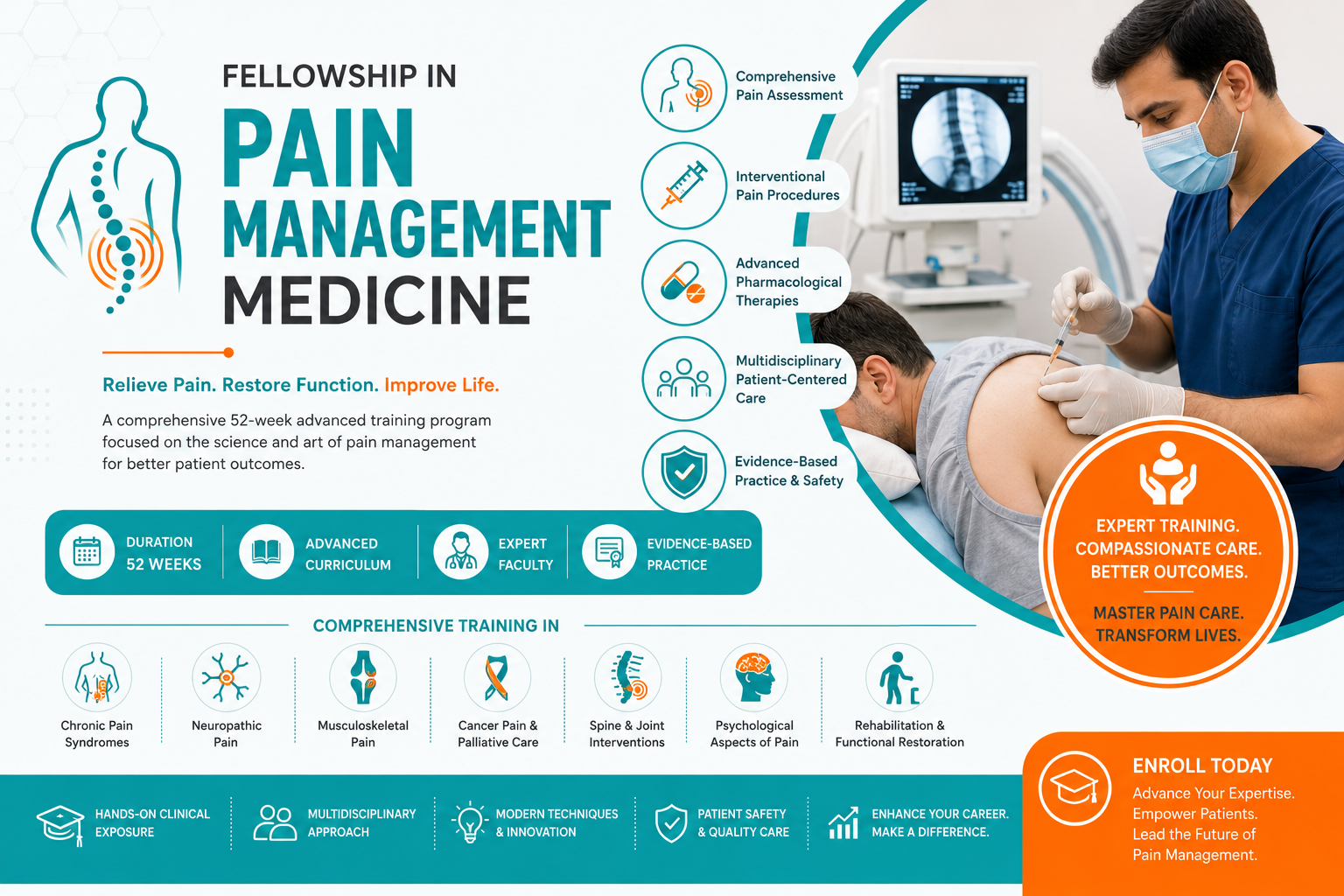

The Fellowship in Pain Management Medicine is a comprehensive 52-week advanced training program designed for healthcare professionals seeking specialized expertise in the assessment, diagnosis, treatment, and long-term management of acute and chronic pain conditions. The program covers pain physiology, pain assessment, pharmacological therapies, interventional pain procedures, rehabilitation, cancer pain management, palliative care, and multidisciplinary treatment approaches. Through evidence-based learning, clinical case discussions, and practical training, participants develop the skills required to improve patient comfort, restore function, enhance quality of life, and deliver comprehensive pain management services across diverse healthcare settings.
The Pain Management Medicine course is designed to equip
healthcare professionals with comprehensive knowledge and skills to
assess, diagnose, and treat various types of pain—acute, chronic, and
cancer-related. It covers pain physiology, pharmacological and non-
pharmacological treatments, interventional techniques, and
multidisciplinary approaches. The course also focuses on patient-
centered care, pain in special populations (elderly, pediatric, palliative),
and includes practical training through case-based discussions and
hands-on workshops. Ideal for doctors, physiotherapists, and
healthcare workers aiming to specialize in pain relief and improve
patient quality of life.
- 7 Sections
- 27 Lessons
- 62 Hours
- Introduction to PainLearn the foundational concepts of pain, including its physiology, types (acute vs. chronic), and mechanisms. Understand how pain affects the body and mind, and the importance of a comprehensive management approach.4
- Pharmacological ManagementExplore the pharmacology of pain relief—covering analgesics, opioids, NSAIDs, adjuvants, and their rational use. Learn dosing strategies, side effects, and evidence-based medication protocols.4
- Interventional Pain ManagementDive into image-guided procedures such as nerve blocks, epidural injections, and radiofrequency ablation. Understand indications, techniques, safety precautions, and outcome monitoring.4
- Non-Pharmacological TherapiesStudy alternative and supportive treatments like physiotherapy, TENS, psychotherapy, acupuncture, and lifestyle changes that aid in long-term pain relief.4
- Pain in Special PopulationsAdapt pain management techniques for pediatric, geriatric, and pregnant patients. Address age-specific challenges and considerations for safe and effective care.4
- Palliative & Hospice Pain CareLearn pain control strategies in end-of-life care. Explore the WHO pain ladder, opioid titration, and holistic approaches to ensure comfort and dignity for terminally ill patients.3
- Clinical Case Discussions & Practical TrainingApply your knowledge through case-based learning, role-plays, and supervised hands-on training to build real-world skills in comprehensive pain assessment and treatment planning.4
You might be intersted in
-
0 Students
-
52 Weeks
-
133 Students
-
52 Weeks
-
129 Students
-
52 Weeks
-
139 Students
-
52 Weeks